

Two Months Old: Your Baby Is Starting to Connect
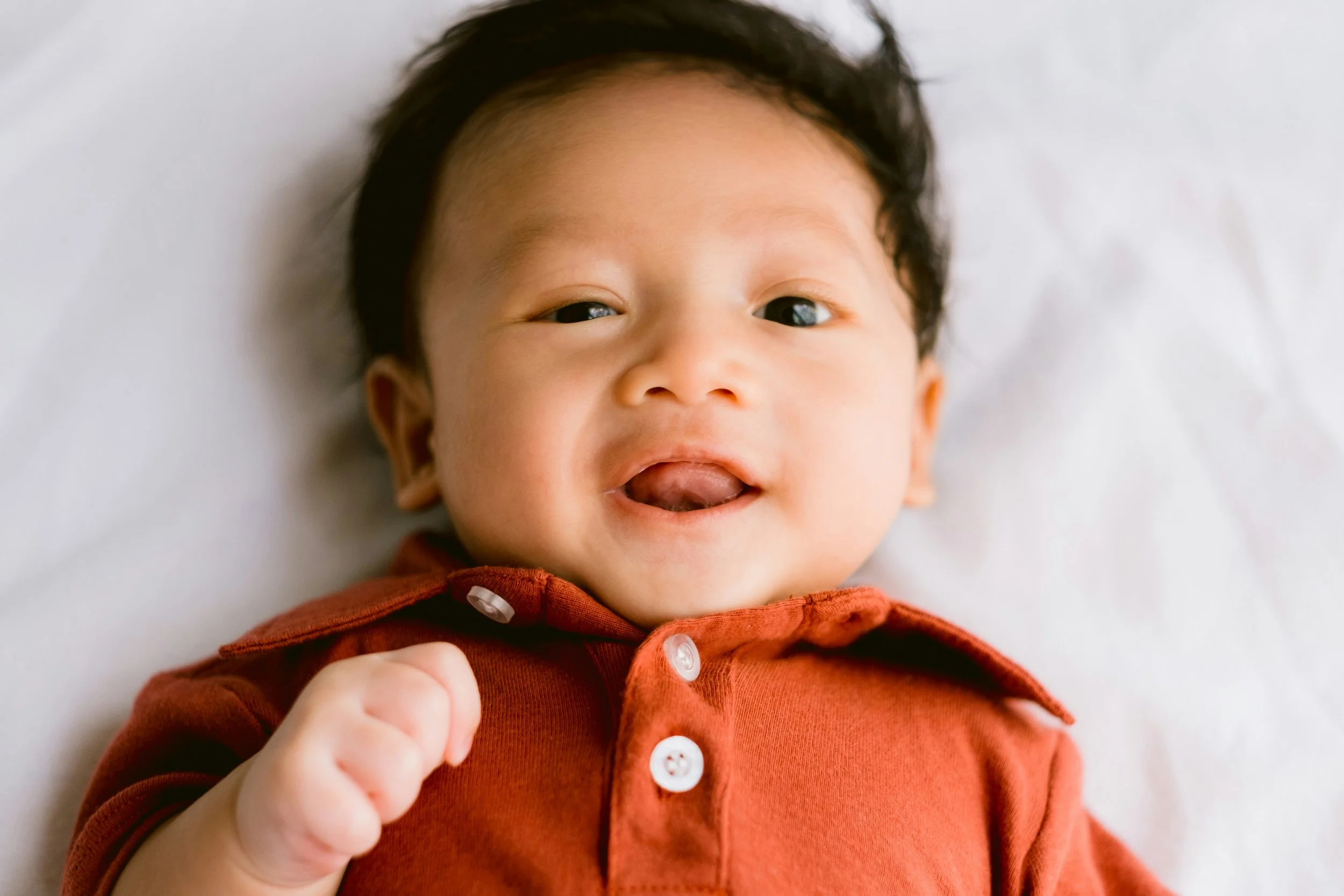
Something shifts around the six- to eight-week mark. The sleepy, curled-up newborn starts to look at you — really look at you — and one day, unprompted, breaks into a real smile. It's a milestone that makes the sleepless nights feel a little more worth it.
Social & emotional development
Two-month-olds are becoming genuinely social creatures. Your baby can now be soothed by your voice or your touch, and they're starting to recognize that you are their person. When you walk over, expect a reaction — widened eyes, stilled limbs, sometimes a full-body wiggle of anticipation.
Calms when spoken to or heldWatches your face closelyLights up when you appearSmiles in response to your smile
Language & communication
Your baby's voice is expanding beyond crying. Coos, gurgles, and soft vowel sounds are their first attempts at conversation — and they mean it literally. When you respond with excitement and talk back, you're teaching them the back-and-forth rhythm that underlies all human communication.
Produces sounds beyond cryingReacts visibly to loud noises
Thinking & learning
Cognitively, your two-month-old is starting to track. They follow you with their eyes as you move around the room and can hold their gaze on an interesting object for a few seconds at a time. Small moments, but each one is the brain building new pathways.
Tracks movement
Follows a caregiver or object with their eyes as it moves
Sustained attention
Can focus on a toy or face for several seconds at a stretch
Movement & physical skills
Motor control is coming along. On their tummy, your baby can now push their head up — a small feat that takes real neck strength. Limb movement is becoming more symmetrical, and those tightly clenched newborn fists are beginning to open up.
Lifts head during tummy timeMoves all four limbs activelyBriefly opens hands
How to support your baby this month
You are your baby's first and most important teacher. Simple, everyday interactions do more for brain development than any toy or gadget. Here are some of the most effective things you can do.
Talk, read, and sing throughout the day — narrate what you're doing, describe what you see. Language exposure starts shaping the brain now.
When your baby makes sounds, echo them back and pause. You're teaching the turn-taking that conversation is built on.
Hold and cuddle freely. You cannot spoil a two-month-old. Physical closeness builds a sense of safety that supports all other development.
Do supervised tummy time every day with a toy placed at eye level. If your baby gets drowsy, move them to their back in a clear, firm sleep space immediately.
Put your phone down when you're with your baby. Being present and responsive is the single biggest thing you can offer right now.
Place a baby-safe mirror nearby during awake time. Your baby will be fascinated — and it's an early step toward self-awareness.
Take care of yourself. A rested, supported parent is better at everything. Ask for help when you need it.
Never shake your baby — not even gently. Shaking can cause severe brain damage or death. If you're feeling overwhelmed, put your baby somewhere safe, step away, and check back in after a few minutes.
Dental expectations at two months
Still no teeth — and that's perfectly normal. The quiet work of tooth development is happening entirely beneath the gumline this month. Here's what to keep in mind as you look ahead.
Keep wiping those gums
After every feeding, use a damp washcloth or soft gauze to wipe your baby's gums. It removes milk residue, prevents early bacterial buildup, and — importantly — gets your baby accustomed to having their mouth touched. That habituation pays off when the first tooth arrives and brushing begins.
Teething is still a few months away
Most babies begin teething somewhere between 4 and 7 months, with the lower front teeth (central incisors) typically leading the way. At two months, any drooling or hand-chewing your baby does is normal exploratory behaviour, not a sign that teeth are imminent.
Feeding habits shape future dental health
Whether you're breastfeeding or bottle-feeding, it's worth knowing that allowing your baby to fall asleep mid-feed — especially with a bottle — leaves milk pooling around the gumline. Once teeth arrive, this is one of the most common causes of early childhood tooth decay. Finishing feeds while your baby is still semi-awake is a simple habit that makes a real difference later.
The 2-month checkup is a great time to ask
Your baby's two-month well-child visit includes several vaccinations and a full developmental review. Use the appointment to ask your pediatrician about oral health — they can advise on fluoride, pacifier use, and when to plan that first dental visit (recommended by age one, or within six months of the first tooth).
Plan ahead: schedule your baby's first dental appointment for around their first birthday. Many pediatric dentists book months in advance, so it's not too early to make the call now.
Every baby develops on their own timeline. If your baby isn't hitting one or more milestones, or if you notice they've lost a skill they once had, bring it up with your pediatrician — early is always better when it comes to support.