

What Is the 3-3-3 Rule for Tooth Pain? | Richardson, TX Dentist
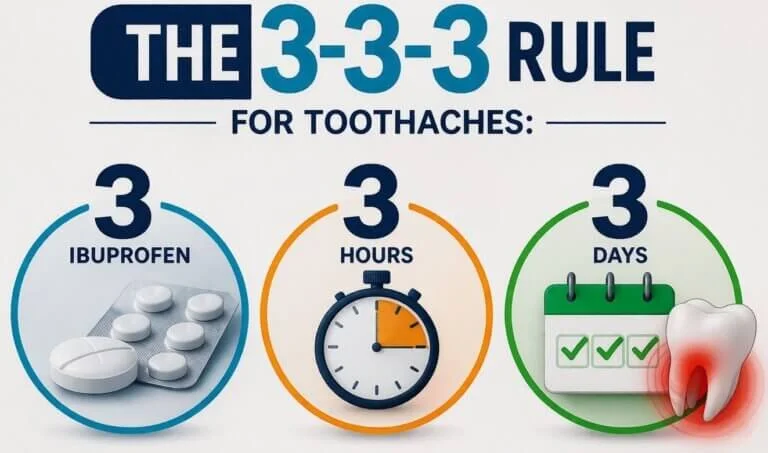
If you’ve ever had a sudden toothache, you know how disruptive it can be. Pain can make it hard to eat, sleep, or focus. One commonly recommended short-term solution is the 3-3-3 rule for tooth pain—a simple method to help manage discomfort until you can see a dentist.
At our dental office in Richardson, TX, we often educate patients on safe, temporary ways to relieve pain while emphasizing the importance of treating the root cause.
What Is the 3-3-3 Rule in Dentistry?
The 3-3-3 rule is an easy-to-remember guideline for short-term toothache relief using ibuprofen:
3 tablets (200 mg each = 600 mg total)
3 times per day (about every 8 hours)
For 3 days only
This method works by reducing inflammation, which is one of the main causes of dental pain.
How the 3-3-3 Rule Helps with Toothaches
Most tooth pain is caused by inflammation around the tooth’s nerve due to decay, infection, or trauma. Ibuprofen is a non-steroidal anti-inflammatory drug (NSAID) that helps:
Reduce swelling
Relieve pressure on the nerve
Decrease throbbing pain
By taking consistent doses throughout the day, the medication maintains a steady level in your system for more effective relief.
Important: This Is Only a Temporary Solution
While the 3-3-3 rule can provide relief, it does not treat the underlying problem.
Toothaches are often caused by:
Cavities
Infections or abscesses
Cracked or damaged teeth
If left untreated, these issues can worsen and lead to more serious procedures like root canals or extractions.
When to See a Dentist Immediately
You should contact a dentist in Richardson, TX right away if you experience:
Pain lasting more than 3 days
Swelling in your face or jaw
Fever or signs of infection
Difficulty chewing or opening your mouth
The 3-3-3 rule is meant to buy you time—not replace professional care.
Safety Tips Before Using the 3-3-3 Rule
This method isn’t safe for everyone. Avoid or consult a dentist/doctor if you:
Have stomach ulcers or kidney issues
Are taking blood thinners
Are allergic to ibuprofen
Are pregnant or have certain medical conditions
Also:
Always take ibuprofen with food
Do not exceed recommended doses
Do not combine with other NSAIDs
Additional Ways to Relieve Tooth Pain at Home
While waiting for your dental appointment, you can also:
Rinse with warm salt water
Apply a cold compress to reduce swelling
Avoid very hot, cold, or sugary foods
Keep the area clean
These methods can help manage symptoms but won’t fix the underlying issue.
Why Early Treatment Matters
Catching dental problems early can save you time, money, and discomfort. What starts as minor sensitivity can quickly turn into severe pain if ignored.
At our Richardson dental office, we focus on:
Preventive care
Early diagnosis
Minimally invasive treatment options
FAQS About the3-3-3 Rule in Dentistry
-
It means taking 600 mg of ibuprofen (3 tablets), three times a day, for up to three days to reduce inflammation and pain.
-
No, it only provides temporary relief. You still need to see a dentist to treat the underlying cause.
-
No more than three days. If pain continues, seek dental care immediately.
-
No, people with certain medical conditions or medications should consult a healthcare provider first.
-
Common causes include cavities, infections, cracked teeth, or gum disease.