

"The Real Cost of Dental Tourism: What They Don't Tell You"
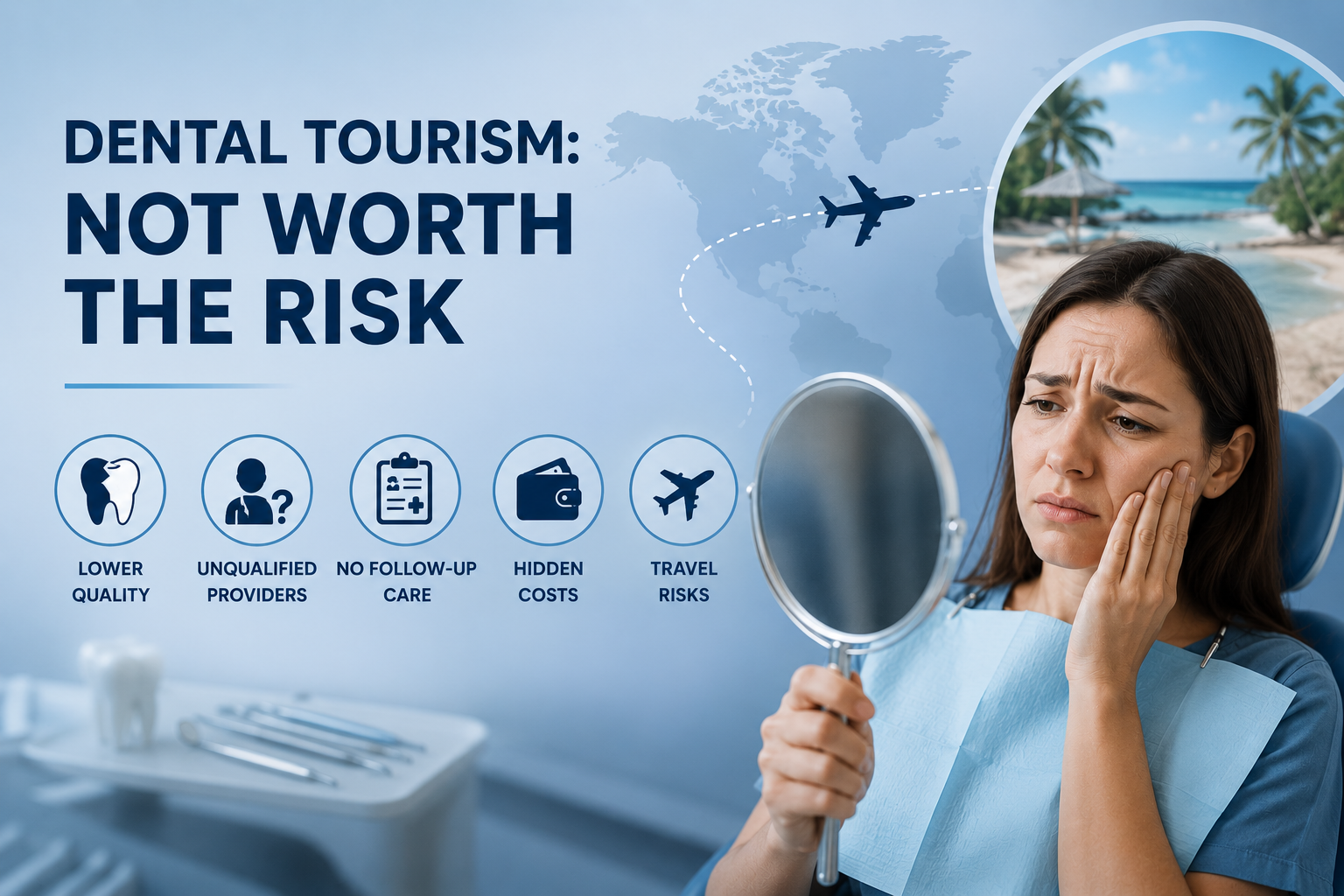
If you've ever searched for ways to save money on dental care, you've probably come across the idea of dental tourism — traveling abroad to countries like Mexico, India, or Thailand to get dental work done at a fraction of the US price. It's an understandable option to consider, especially if you're paying out of pocket without dental insurance. We get it. Dental care is a real expense, and we never want cost to stand between you and a healthy smile.
That said, as your local dental team in Richardson, TX, we feel it's our responsibility to make sure you have the full picture before making a decision. There are some important factors that often get left out of the conversation — and they can make a significant difference in your long-term costs and oral health outcomes.
The True Total Cost May Surprise You
At first glance, the savings look compelling. A crown that costs $1,400 in the US might be listed at $200 overseas. That's a $1,200 difference — hard to ignore. But let's look at the full picture.
When you factor in round-trip flights ($900–$1,400), hotel accommodations for the minimum 5–7 days most procedures require ($300–$600), and time away from work, the total trip cost can easily reach $2,000–$2,800. In many cases, that puts you at or above what you would have paid locally — before accounting for anything going wrong.
The scenario where dental tourism delivers genuine savings is typically a full-mouth reconstruction involving 10 or more procedures in a single trip, where the volume of work creates meaningful cost differences even after travel expenses. For one or two procedures, the numbers often don't work out the way people hope.
What Happens If Something Needs to Be Fixed Later?
This is one of the most important questions to ask — and one that's easy to overlook when you're focused on upfront savings.
Dental work, like any medical procedure, sometimes requires follow-up care. If a crown placed abroad needs to be replaced 12–18 months later, a US dentist will need to remove the existing crown, assess the tooth underneath, and place a new one. That process typically costs more than a straightforward crown from the start, because it involves additional diagnostic and removal steps. The original savings can quickly be offset by the cost of correcting or replacing the work.
We want to be clear — this isn't a criticism of international dentists, many of whom are highly skilled. It's simply a reflection of the reality that follow-up care across borders is complicated, and that complexity has a cost.
The Records Gap Is a Real Challenge
When patients come to us after having work done abroad, one of the first things we run into is a lack of records. Without knowing what materials were used, what size implant was placed, or what the original X-rays showed, we have to start from scratch — new X-rays, a full assessment, and a complete evaluation of existing work. That diagnostic process typically runs $200–$400 before any treatment begins.
In the case of dental implants specifically, identifying the brand and dimensions is essential for ordering compatible parts and components. When an implant brand has no US distributor or the records aren't available, it can significantly limit your options for future care. This is something worth discussing with any provider before treatment begins, whether at home or abroad.
Can It All Be Done in One Trip?
For many procedures, yes — but for dental implants, the biology involved means the answer is more complicated. Implants require a healing period of 3–6 months for the bone to properly integrate with the titanium post before a permanent crown can be placed. That timeline is determined by the human body, not by the clinic.
What this means in practice is that a complete implant procedure genuinely requires two separate visits spaced months apart. When that's not possible due to travel logistics, a temporary restoration is typically placed at the end of the first visit. Temporaries are designed as short-term solutions, and if permanent follow-up is delayed, it can put the implant and surrounding tissue at risk. It's worth asking detailed questions about the full treatment timeline before committing to any implant procedure.
What About the Materials Used?
In the United States, dental materials must meet FDA standards, and there is a documented paper trail for every material placed in your mouth. That accountability matters — not because overseas materials are automatically inferior, but because having verified, traceable materials makes future care significantly easier and safer.
When the materials used in a restoration are unknown, a US dentist treating you later has to make conservative assumptions, which can affect treatment options and costs. Asking for complete written documentation of all materials used — including brand names and specifications — is a reasonable and important step any time you receive dental care, anywhere in the world.
Affordable Dental Care Closer to Home
We understand that cost is a real barrier for many people, and we never want that to be the reason someone avoids the dental care they need. That's exactly why we've built our practice around making quality dental care accessible — whether or not you have insurance.
At Smiles of North Dallas, we offer:
In-House Dental Savings Plan (QDP) — an affordable membership plan designed specifically for patients without insurance
Flexible financing options — low monthly payment plans to fit your budget
Transparent pricing — so you always know what to expect before treatment begins
Special promotions for new patients — ask us about current offers
We proudly serve patients from Richardson, Plano, Garland, Wylie, Murphy, Sachse, and the greater North Dallas area. Our goal is to be the affordable, trustworthy dental home your family deserves — right here in your community.
Ready to Take the Next Step?
If cost has been keeping you from getting the dental care you need, we'd love to talk through your options. Call us at (972) 644-9595. We're here to help you find a solution that works for your smile and your budget — no passport required.